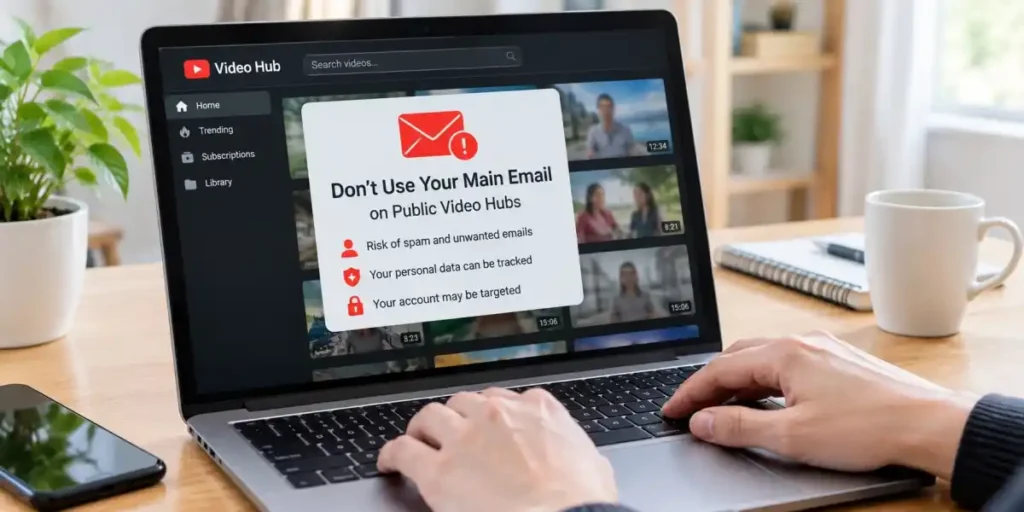
Using your primary email address on open directories exposes your personal identity to constant corporate data collection, automated phishing attempts, and password stuffing attacks. Exploring Why You Should Never Use Your Main Email on Public Video Hubs highlights how a simple sign-up choice can instantly compromise your personal accounts and open financial lines. Leaving your primary contact credentials inside unverified web directories gives malicious data networks a permanent tracker linked directly to your real life.
Here is the thing: most people use an optional account system on video indexers like NoodleMagazine simply to save personal favorites or bypass default site filters. They fill out the quick registration screen with the exact same password and email combo they use for their personal inbox or banking portal.
But it backfires completely. Public content hubs do not possess the expensive, advanced defense systems used by massive cloud entities. When you give them your data, you cross your fingers and hope their backend setup doesn’t leak your credentials within a month.
How do public directory networks handle your registration data?
A standard, trustworthy business uses heavy server encryption and isolated databases to shield client names. Public media search indices work under a vastly different blueprint.
Because these directories prioritize scraping millions of web links over network defense, user security sits completely at the bottom of their development budget.
Unsecured database infrastructures and leaky server logs
Many small web directories rely on cheap, pre-configured server bundles that use out-of-date coding versions. They rarely use hashing scripts to mask passwords or hide email strings in their logs.
Let’s look at a concrete case scenario from a recent platform audit. A regional media directory kept its user sign-up log sitting inside a generic, text-based server file for over 180 days.
Any script kiddie with a basic port scanner could access that directory file and scrape thousands of active primary email addresses without triggering a single security warning. If your primary email lands in a public text dump like that, automated spam engines grab it immediately.
The hidden industry of data brokers and cross-site matching
Shady ad networks don’t just put annoying pop-unders on your phone screen. They use email addresses to build extensive behavioral tracking maps.
When you enter your main email on an open hub, that address gets matched against public social media tracking tools. Advertising networks use this cross-matching method to find out your real name, your local shopping habits, and your physical neighborhood.
[Main Email Entered] ---> [Cross-Site Tracker Checks Pixels] ---> [Linked to Social Profile] ---> [Personal Identity Leaked]
This tracking profile explains why you suddenly start getting highly targeted, sketchy spam messages in your personal inbox after checking out an aggregation platform. They know who you are because your primary email binds your separate web habits together.
What actually happens when a public hub suffers a data breach?
When an unverified web indexing database gets hacked, the stolen file lists do not sit on a dark-web forum for long. Threat networks deploy automated scripts called credential stuffers to exploit the data instantly.
These automated bots take your leaked email and password string and test it across 50 popular platforms within minutes. They systematically attempt access into PayPal, Amazon, Netflix, and common banking web portals.
| Attack Vector Stage | Script Action Against Your Data | Immediate System Threat |
|---|---|---|
| 1. Database Scraping | Hackers pull raw text email dumps from cheap servers | Your primary address lands on public hacker forums |
| 2. Bot Formatting | Software organizes lists into automated attack formats | Your account credentials enter live stuffing networks |
| 3. Multi-Site Stuffing | Attack bots test your login across 50+ banking and media apps | High risk of permanent financial account takeover |
| 4. Phishing Deployment | Scammers push targeted scare emails straight to your inbox | Your real identity gets targeted with malicious attachments |
Consider this scenario: you used your main Gmail address to save a custom streaming loop on a video site, reusing a variations of your standard password. If that streaming site drops its database, a bad actor in another country could log into your actual personal accounts before you even get an automated alert. This systemic risk is exactly Why You Should Never Use Your Main Email on Public Video Hubs.
What are the best secure alternatives to using a primary email?
You do not have to compromise your primary inbox just to save a few playlists or customize your media feeds. You can block tracking networks completely by utilizing temporary identity tools.
- Temporary Burner Mail Services: Use free utilities like Temp-Mail or 10MinuteMail to generate a short-lived address block. These text strings last long enough to receive a verification code and vanish permanently afterward.
- Built-In Email Aliases: If you use an iPhone or a premium DuckDuckGo browser setup, utilize features like Hide My Email. This utility generates a randomized placeholder address that forwards necessary messages to you without ever revealing your actual identity.
- Dedicated Spam Inboxes: Create a separate, secondary account on a free privacy-focused email service like Proton Mail. Use this secondary screen name strictly for public directories, keeping it entirely disconnected from your personal name, real apps, and bank cards.
So, what is the best move if you already used your primary credentials on a public portal? Open your browser settings right now, clear your stored profile data from that index domain, and immediately update your primary accounts to utilize unique passwords combined with two-factor authentication.
6. FAQ Section
Why You Should Never Use Your Main Email on Public Video Hubs if the site says registration is totally safe?
Web platforms frequently state their registration processes are completely secure as part of standard marketing text templates. However, public indexing platforms rarely invest in enterprise-grade database encryption or continuous security audits, leaving your primary contact data highly vulnerable to automated server hacks.
Web platforms frequently state their registration processes are completely secure as part of standard marketing text templates. However, public indexing platforms rarely invest in enterprise-grade database encryption or continuous security audits, leaving your primary contact data highly vulnerable to automated server hacks.
Can using my main email address on a web directory expose my physical location?
Yes, it can happen through cross-site data matching pipelines. Aggressive marketing networks buy leaked database lists and cross-reference email handles against public social media files, revealing your name, real location, and personal details.
Yes, it can happen through cross-site data matching pipelines. Aggressive marketing networks buy leaked database lists and cross-reference email handles against public social media files, revealing your name, real location, and personal details.
What is the cleanest way to fix my security if I already signed up with my primary email?
Log back into that specific account dashboard, navigate directly to your user settings panel, change the email string to a temporary burner address, and click save. Once done, go to your primary email account and update your security credentials with a strong, randomized password block.
Log back into that specific account dashboard, navigate directly to your user settings panel, change the email string to a temporary burner address, and click save. Once done, go to your primary email account and update your security credentials with a strong, randomized password block.
Will utilizing an alias or burner email address break my video player experience?
No, using an alias will not impact your streaming or browsing speed at all. A temporary or alias email handles the activation confirmation smoothly, allowing you to use custom platform features while keeping your primary digital footprint fully hidden.
No, using an alias will not impact your streaming or browsing speed at all. A temporary or alias email handles the activation confirmation smoothly, allowing you to use custom platform features while keeping your primary digital footprint fully hidden.
7. Conclusion
The absolute most critical takeaway to remember is that protecting your primary email address from unverified databases is mandatory to prevent identity theft and multi-platform account takeovers. Leaving your main contact logs inside public indexing engines allows third-party ad networks to build an aggressive profile map of your life, but utilizing a three-minute burner email ensures your digital workspace stays fully anonymous and protected.