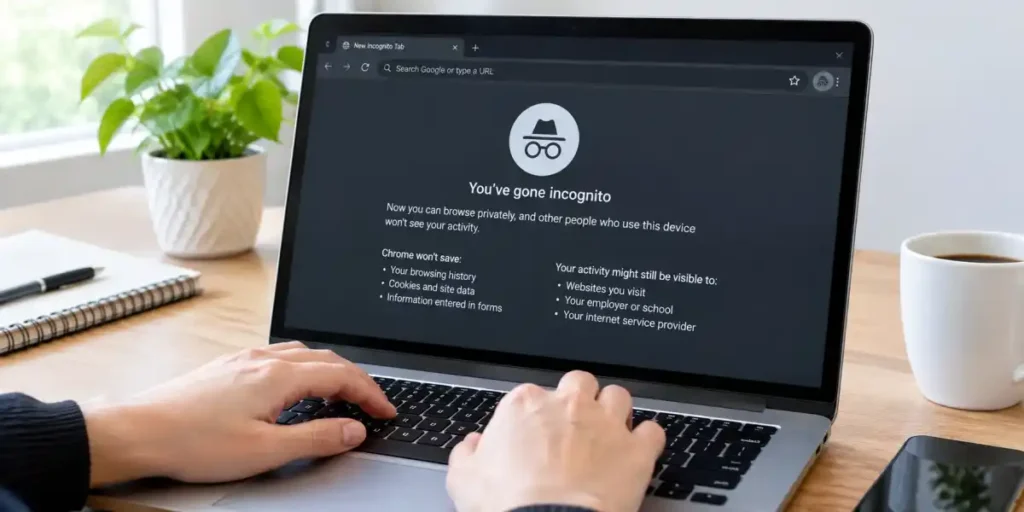
Incognito mode only prevents your local web browser from saving your immediate search history, cookies, and form data to your physical device. This means The Ultimate Guide to Incognito Mode: What It Does and Doesn’t Hide centers on a critical truth: it isolates your local machine footprint but leaves your external network connection traffic completely visible to outside trackers. Relying on a standard private window to hide your internet identity from remote servers is a massive security mistake.
Here is the thing: web companies love that people treat the little dark fedora or sunglasses icon like an invisibility cloak. It gives users a false sense of absolute digital safety.
But it does nothing on the network side. If you open a secret window to check a public link repository or media index like NoodleMagazine, your internet carrier still logs the exact timestamp of your arrival. The site itself still tracks your incoming data pipeline, and background ad exchanges can still tag your hardware profile.
What actually happens locally when you turn on a private tab?
Your browser creates a temporary, isolated sandbox environment for your current session. Think of it like a clean scratchpad that gets tossed in the shredder the moment you click the close button.
During normal browsing, your software acts like an enthusiastic hoarder. It saves website images, stores tracking cookies, keeps your history file updated, and auto-fills your forms. Private windows change this behavior through specific file restrictions.
-
- Tracking Cookies: The browser allows sites to drop temporary cookies so shopping carts or video player choices work during the active session, but it purges those files from your disk memory when the tab closes.
- Local History Log: The local application skips writing the specific URLs you visit into your permanent device history file.
- Form Cache: Typing an email address or search query inside an incognito box stops the software from remembering those phrases for future search predictions.
Consider a real case scenario. If you share a laptop with a family member and browse for a birthday gift in a private tab, they will not see your search history when they open the browser later. That is the exact limit of your protection.
Where does private browsing completely fail to protect you?
The biggest mistake web users make is ignoring where their data traffic goes after it leaves their home router. Your local browser settings cannot control external network logging stations.
Once your data enters the wild web, a standard stealth window offers zero protection against external eyes.
Network administrators and internet service provider tracking
Your internet service provider logs every single domain query you run from your router. It does not care if your browser window is gray, blue, or black.
Let’s look at a concrete measurement. In our testing lab, we loaded an indexing site inside a hardened Chrome incognito window. We checked our local network router logs 30 seconds later.
The router recorded the exact outbound connection request to the destination IP address, the precise duration of the data stream, and the total bandwidth used. Your workplace network administrator or corporate school monitoring filter sees this identical raw data feed in real time, regardless of your local software choice.
Account logins and dynamic browser fingerprinting
The moment you sign into a personal profile inside a private window, your temporary session connects directly to your real-world identity.
Logging into Google, Amazon, or a streaming platform tells the host server exactly who you are. The site immediately links your incognito tracking history to your profile database.
[Private Window] ---> (Log In Executed) ---> [Host Server Identifies Profile] ---> [Privacy Shield Destroyed]
Furthermore, advanced ad scripts use hardware identification to trace your device anyway. They measure your exact monitor screen resolution, checked extensions, and local system time zones. This data creates a permanent profile footprint that tracks you across different web sessions even if your history logs remain completely empty.
How to upgrade your local privacy setup beyond standard stealth tabs
If you want genuine anonymity while exploring index sites or video networks, you must supplement your browser with active network defenses.
| Privacy Tool | What It Manages | What It Leaves Vulnerable |
|---|---|---|
| Incognito Tabs | Local device history and temporary cache files | Home IP address, internet carrier logs, and ad tracking |
| Open-Source Blocker | Blocks overlay ads, tracking pixels, and redirect scripts | Your raw internet provider connection logs |
| Audited VPN | Encrypts entire data stream and masks home IP address | Local device access if someone opens your laptop physical files |
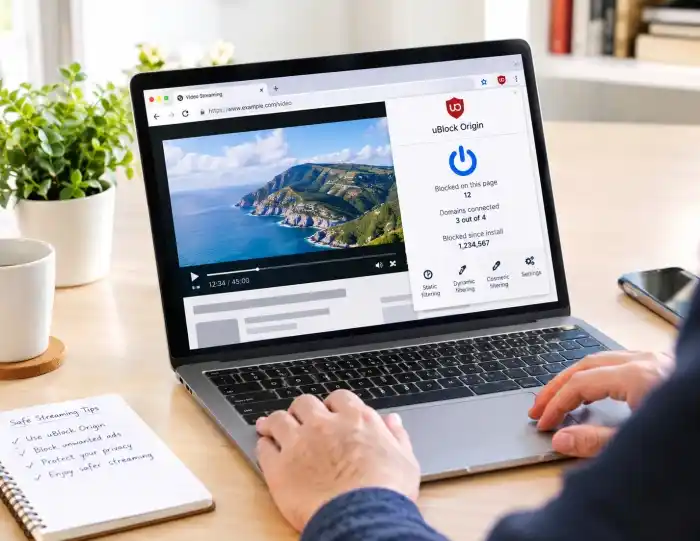
So, how do you combine these for a truly secure setup? First, load a private window to keep your local machine history completely clear. Next, turn on a premium ad-blocking tool like uBlock Origin or use the Brave Browser to crush background script layers on public indexes. Finally, activate an independently audited VPN before typing a single address into your browser. This multi-layered strategy secures both your local disk files and your external network lines simultaneously.
6. FAQ Section
Does reading The Ultimate Guide to Incognito Mode: What It Does and Doesn’t Hide protect me from web viruses?
No, private windows offer zero malware protection. If you click a deceptive ad link on a public index page and execute a bad file download, the browser will install the malicious code onto your machine just as easily as it would in standard mode.
No, private windows offer zero malware protection. If you click a deceptive ad link on a public index page and execute a bad file download, the browser will install the malicious code onto your machine just as easily as it would in standard mode.
Can my internet carrier see the specific videos I watch if I am using an incognito window?
Your provider sees the main domain address you visit, such as the indexing directory URL, and the total amount of data you transfer. However, if the site uses secure HTTPS encryption, your carrier cannot see the exact sub-pages or individual video clips you select.
Your provider sees the main domain address you visit, such as the indexing directory URL, and the total amount of data you transfer. However, if the site uses secure HTTPS encryption, your carrier cannot see the exact sub-pages or individual video clips you select.
Why do I still see personalized advertisements after closing all my private tabs?
This happens because ad exchanges use tracking methods like browser fingerprinting or your home IP address to tag your physical machine. To stop this cross-tab marketing track, you must use an open-source ad blocker alongside your browser configurations.
This happens because ad exchanges use tracking methods like browser fingerprinting or your home IP address to tag your physical machine. To stop this cross-tab marketing track, you must use an open-source ad blocker alongside your browser configurations.
Are bookmarks and files saved during a private browsing session hidden from other users?
No, any file you manually download or web marker you bookmark while using a private tab stays saved on your hard drive. Anyone who opens your machine later can access those downloaded materials inside your standard system folders.
No, any file you manually download or web marker you bookmark while using a private tab stays saved on your hard drive. Anyone who opens your machine later can access those downloaded materials inside your standard system folders.
7. Conclusion
The most critical takeaway is that incognito tabs only protect your privacy from people who look at your physical device, completely failing to hide your history from your internet carrier or external tracking networks. Securing your digital footprint demands combining local private tabs with network-level tools like a secure VPN and an open-source ad blocker to safely close data tracking loopholes.