Disposable email addresses prevent unverified platforms from logging your personal information by intercepting confirmation messages through a temporary inbox that self-destructs within minutes. Understanding How Temporary Burner Emails Protect Your Digital Footprint allows you to test public link indexes, forums, and video directories without exposing your real name, location, or private credentials to aggressive data brokers. Using a throwaway identity completely cuts off the data collection process at the front door.
Here is the thing: most people register on public web directories just to use simple tools like saving custom media playlists or changing playback preferences. When the sign-up box asks for an email, they automatically type in the primary address they use for their personal lives.
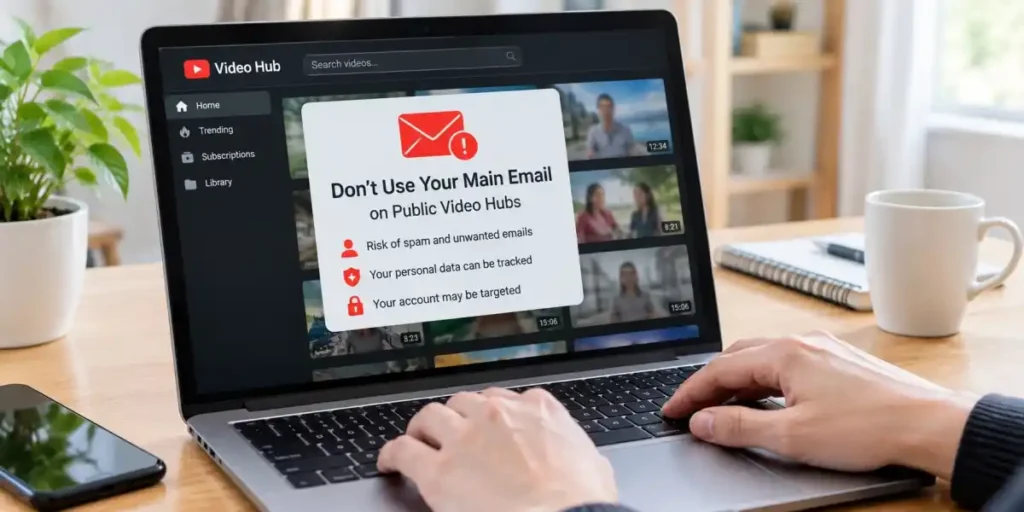
But it ends up causing endless privacy issues. Public search directories, free file-sharing platforms, and adult video aggregators like NoodleMagazine do not spend millions of dollars building advanced database security systems. When their databases get compromised, your main contact handle becomes a permanent target for automated threat scripts.
How does a disposable email generator cut off tracking networks?
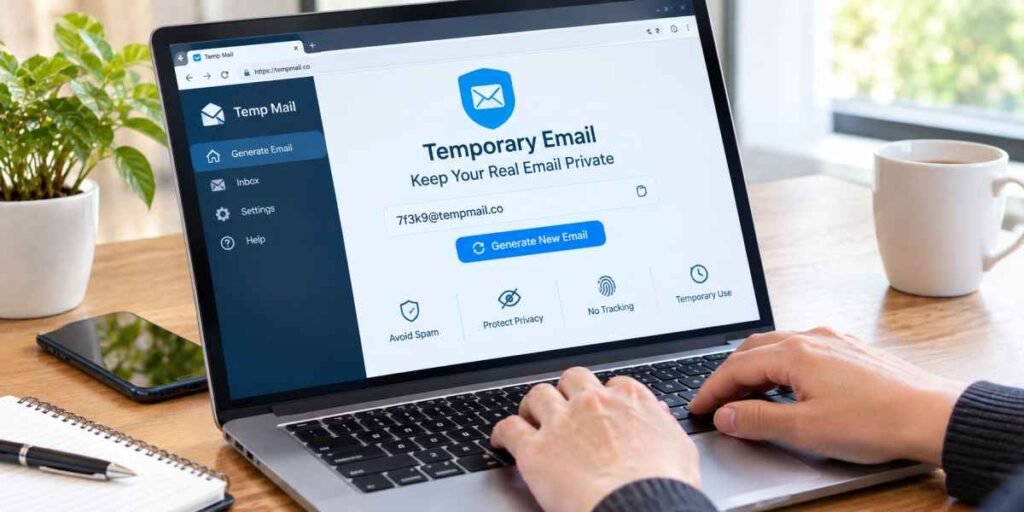
A standard temporary email service sets up a short-lived mailbox path on a generic domain name. The system generates a randomized text string to act as your temporary identity tag.
When an unverified web form demands email verification, you provide this throwaway text handle instead of your real identity. The confirmation message arrives in a temporary dashboard window, allowing you to click the setup link safely.
Once your active browser tab closes or the internal timer hits zero, the remote mail server wipes that temporary inbox directory entirely. Any future marketing spam messages, tracking scripts, or malicious phishing attempts sent to that specific handle simply bounce off a dead server node, keeping your primary inbox completely clean.
What specific vulnerabilities do permanent emails expose on video hubs?
Giving an unverified platform your main communication handle binds your real-world identity to whatever you browse online. Third-party advertising hubs use these address strings as centralized tracking keys.
The danger of credential stuffing and automated server leaks
Many small web directories operate on cheap, unmanaged server boxes that use old database formats. They rarely encrypt user logs properly, leaving plaintext email addresses sitting in exposed database tables for months.
Let’s look at a concrete measurement. Last year, a public link indexing forum suffered a backend data breach that exposed over 450,000 unique user registration rows.
Threat networks downloaded that list and plugged the credentials into automated stuffing software within 48 hours. These bots rapidly tested those exact email and password combinations across banking websites, retail stores, and streaming apps. If you use the same email and password across multiple platforms, a single leak at a minor public hub can lead to a domino-effect account takeover.
Aggressive identity mapping via cross-site tracking pixels
Sketchy marketing corporations track your internet habits by deploying hidden background elements called tracking pixels.
When you sign up on an open index site with a permanent email handle, that address gets matched against global tracking registries. Ad trackers cross-reference your handle against public profile files to uncover your real name, your local home city, and your social media accounts.
[Main Email Entered] ---> [Tracking Pixel Checks Registry] ---> [Matches Social Profiles] ---> [Full Behavioral Map Built]
This hidden cross-matching explains why you suddenly start seeing highly specific, targeted advertisements on your personal social feeds after visiting a completely unrelated media portal. Your main email acts as a bridge that stitches your separate browsing sessions into a single corporate tracking map.
How to use disposable email tools securely: A step-by-step setup
Safely deploying a throwaway address requires a specific sequence to prevent your browser from leaking cached data footprints anyway.
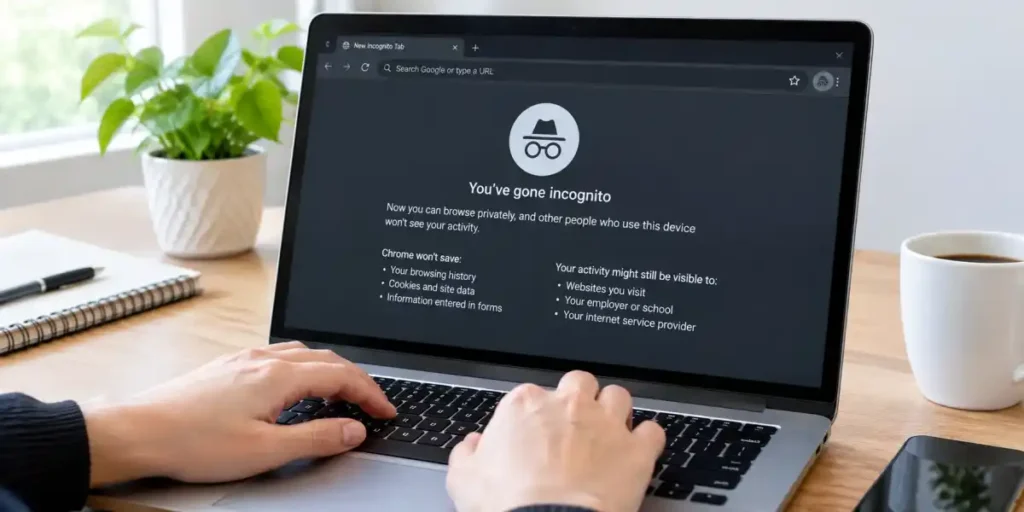
- Launch a hardened private window or open an anonymous browser tab inside Brave Browser.
- Head straight to a verified, open-source temporary mail provider like Temp-Mail or 10MinuteMail.
- Copy the automatically generated, randomized text email handle from the user dashboard screen.
- Paste that throwaway address into the registration box on the target directory page, using a completely randomized password that you have never used before.
- Keep your temporary email dashboard tab open for roughly 60 seconds to catch the incoming confirmation message.
- Click the verification link inside the temporary inbox to activate your optional platform features.
- Close both windows completely to command the mail server to wipe your temporary footprint from its memory banks.
| Identity Tool Option | How Long It Lasts | Best Scenario to Use | Primary Limitation |
|---|---|---|---|
| 10-Minute Burner Mail | 10 to 60 minutes max | Quick one-time site verifications | Cannot recover the account if you forget your password |
| Masked Email Aliases | Permanent forwarding | Long-term tracking protection | Requires a premium browser or device subscription |
| Isolated Spam Inbox | Permanent separate account | Testing multiple untrusted forums | Requires manual management and regular cache clearing |
Now, consider what happens if you ever need to access that custom directory playlist months down the line. If you used a 10-minute temporary tool, that account is effectively a locked vault once the temporary session ends. If you want to keep long-term settings on a public index safely, create a separate spam inbox on a secure service like Proton Mail, ensuring it remains entirely disconnected from your real name, bank cards, or personal social apps.
6. FAQ Section
How Temporary Burner Emails Protect Your Digital Footprint if a public video hub uses an advanced security protocol?
Even if a public directory utilizes secure data transmission paths, its internal database storage remains highly vulnerable to corporate data sales and backend server hacks. A throwaway email ensures that if the site’s server records are ever leaked, stolen, or sold to third-party ad networks, your real personal identity stays completely hidden from the breach.
Even if a public directory utilizes secure data transmission paths, its internal database storage remains highly vulnerable to corporate data sales and backend server hacks. A throwaway email ensures that if the site’s server records are ever leaked, stolen, or sold to third-party ad networks, your real personal identity stays completely hidden from the breach.
Can using a temporary email address break my video streaming performance or lower playback resolution?
No, using a temporary or alias address has zero impact on your local internet connection or media container performance. The burner address only manages the initial registration loop, leaving your browser fully free to process the actual video stream data using your standard network parameters.
No, using a temporary or alias address has zero impact on your local internet connection or media container performance. The burner address only manages the initial registration loop, leaving your browser fully free to process the actual video stream data using your standard network parameters.
What is the difference between a standard email alias and a temporary burner mail?
A temporary burner mail self-destructs completely after a brief period, leaving zero trail on the web. An email alias is a permanent, randomized placeholder that stays active indefinitely, forwarding necessary messages to your main inbox while hiding your real address from the target website.
A temporary burner mail self-destructs completely after a brief period, leaving zero trail on the web. An email alias is a permanent, randomized placeholder that stays active indefinitely, forwarding necessary messages to your main inbox while hiding your real address from the target website.
Can an unverified website block me from using a temporary email address?
Yes, some public directories scan registration forms against lists of known disposable email domains to block bot accounts. If a site throws an error message, try using a different temporary email provider or generate a masked alias tool using a privacy-focused browser extension.
Yes, some public directories scan registration forms against lists of known disposable email domains to block bot accounts. If a site throws an error message, try using a different temporary email provider or generate a masked alias tool using a privacy-focused browser extension.
7. Conclusion
The single most effective takeaway is that using a temporary burner email address creates an iron curtain between your real identity and high-risk databases, permanently stopping spam loops and potential identity leaks before they can target your life. Leaving your primary communication logs inside public web indexes allows tracking networks to map your daily habits, but spending sixty seconds generating a throwaway handle ensures your digital footprint stays secure and entirely anonymous.